
Most local business owners spend time setting up their Google Business Profile, add a few photos, fill in their opening hours, and consider it done. But there is a layer that gets overlooked almost every time: the relationship between what you list on your GBP and how your website is structured behind it. Get this wrong and you are sending Google mixed signals, splitting your local ranking power, and potentially confusing the very customers who are ready to hire you.
The root of the problem, in most cases, comes down to one thing. Business owners do not distinguish between products and services. They treat them as the same category. On a Google Business Profile, and on the website pages linked to it, that distinction is not just useful. It is fundamental.
What Google Business Profile actually asks you to do?
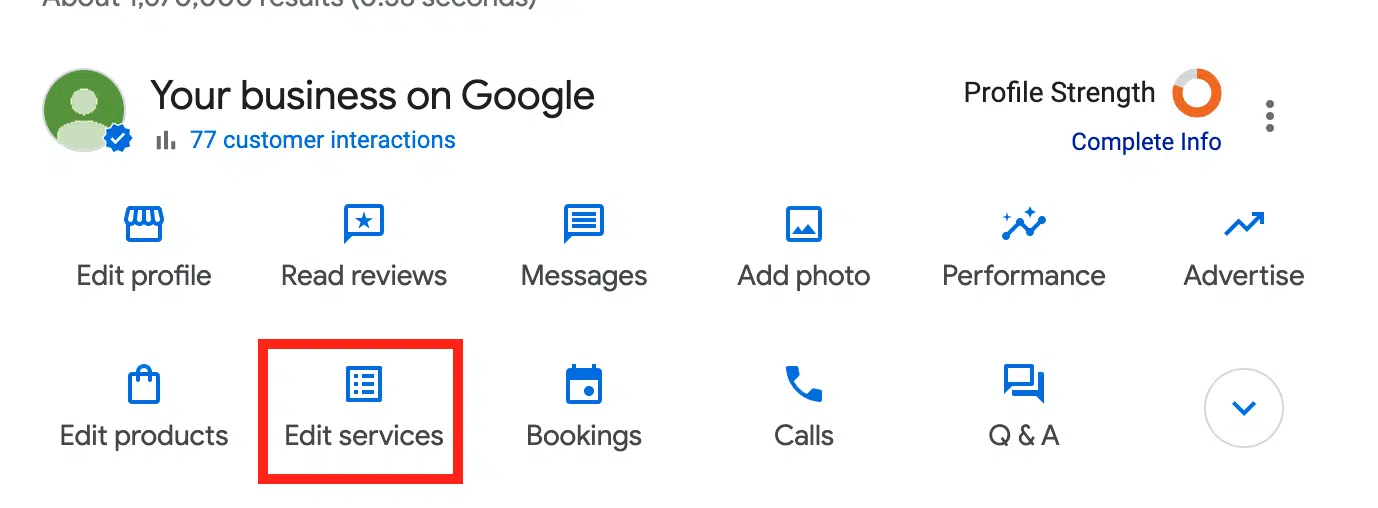
When you log into your GBP and navigate to your profile editor, you will notice that Google gives you two separate sections: one for products and one for services. This is not a coincidence. Google makes that distinction deliberately because the two things serve completely different purposes in a local search context.
The services section allows you to list what you do. The products section allows you to showcase what you sell. When you fill both correctly and link them to the right pages on your website, you give Google a coherent picture of your business. When you muddle them together, or ignore one section entirely, you leave Google to guess. And Google guessing is rarely good for your rankings.
Products and services are not the same thing
This sounds obvious, but it catches out a surprising number of businesses. Let us use a simple example. An air conditioning company sells AC units. That is a product. The same company also installs, repairs, and maintains those units. Those are services. They involve different customers at different stages, different search queries, and different decision making processes.
Someone searching “split AC unit” is browsing. They want to know what is available, what it costs, and whether it suits their space. Someone searching “AC repair near me” has an urgent problem and needs someone to come and fix it today. These are completely different people with completely different needs, and they should land on completely different pages.
On your GBP:
Products section: split AC unit, ducted AC system, portable AC unit
Services section: AC installation, AC repair, AC maintenance contracts
If you list “AC repair” under products, or lump installation in with the units themselves, Google does not know how to categorise what you offer. More importantly, the customer does not either.
How this flows through to your website
Your GBP is only as strong as the pages it points to. When someone clicks through from your Business Profile to learn more, they should land on a page that matches exactly what they were looking at. A product listing should go to a product page. A service listing should go to a service page. If both point to your homepage, or to a generic page that tries to cover everything, you lose the relevance signal that Google was using to rank you in the first place.
This is why your website structure needs to mirror the logic of your GBP. Separate product pages for what you sell. Separate service pages for what you do. Each page targeted at a specific intent, written for a specific type of customer.
GBP products section
Split AC unit
Ducted AC system
GBP services section
AC installation
AC repair
AC maintenance
Links to your website
/products/split-ac-unit
/products/ducted-ac-system
Links to your website
/services/ac-installation
/services/ac-repair
/services/ac-maintenance
The local pack and why this matters even more for local businesses
When someone searches for a local business, Google often shows a map with three listings before any organic results. This is called the local pack, and your GBP is what gets you into it. The businesses that appear there are not always the ones with the best websites. They are the ones whose GBP signals most clearly match the search query.
If someone searches “window installation in [your town]” and your GBP has window installation properly listed as a service, with a dedicated service page on your website to back it up, you are giving Google every reason to show your business in that local pack. If installation is buried somewhere on a general windows page that also talks about the product itself, the signal is weak and Google may well show a competitor who has got the structure right.
A quick audit you can do right now
Open your Google Business Profile and go to your products and services sections. Write down everything listed there as two separate columns. Then open your website and check whether each item has its own dedicated page. If your product listings point to a homepage or a catch-all page, that needs fixing. If your service listings do not exist on your website at all, that is an immediate opportunity.
The goal is a clean, consistent thread from GBP listing to dedicated website page to location page where relevant. Every link in that chain should reinforce the same intent. When it does, Google understands your business clearly, your customers land in the right place, and your local rankings reflect the effort you have put in.
The takeaway
Products and services are different things. Google knows this, which is why it gives them separate sections on your Business Profile. Your website should reflect the same logic with separate pages for each. When your GBP and your website speak the same language, you stop leaving local rankings on the table and start showing up where your customers are actually looking.
Start with two lists: everything you sell and everything you do. That separation is the foundation of both a well-structured website and a well-optimised Google Business Profile.
Leave a Reply
Your email address will not be published. Required fields are marked *