
Every month, I sit down and build SEO reports for my clients. And honestly, for a long time, the structure was straightforward: rankings, traffic, clicks, done. But recently, something new started showing up in Google Analytics that made me rethink what a good SEO report should actually cover in 2026.
Let me walk you through what I include in every client report, and then we will talk about LLM traffic because it is something you absolutely need to start tracking.
What a Good SEO Report Should Include
1. Traffic Overview
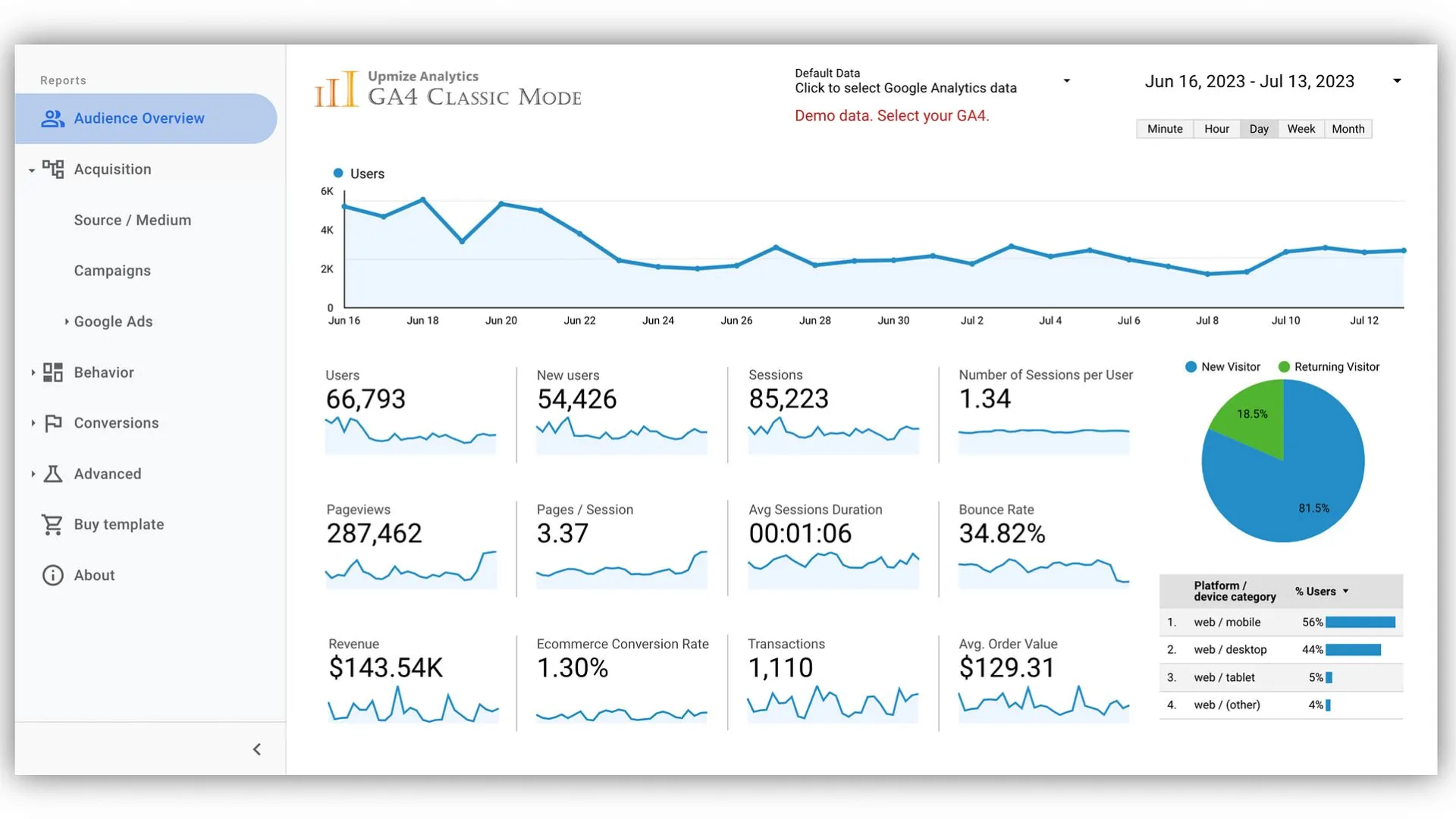
Start with the big picture. How many users visited the site this month compared to last month? For one of my clients in February 2026, total active users went from 4,043 in January to 8,801 in February. That is a 117% increase month on month. When a client sees a number like that, it immediately tells them the work is paying off.
Include new users, returning users and active users. These three together tell you whether the site is growing its audience and retaining it.
2. Channel Breakdown
This is where the real story lives. Break down where the traffic is coming from: organic search, paid search, direct, referral, organic social, and the newer one, cross-network.
In the same February report, cross-network traffic jumped from 163 users in January to 6,318 users in February. That single channel shift changed the entire month. Without the channel breakdown, a client would just see a traffic increase and not understand why.
3. Engagement Metrics
Sessions, engaged sessions and engagement rate. These tell you whether the traffic is actually interested or just bouncing off. Organic search consistently had the strongest engagement time at around 1 minute 15 seconds, which makes sense because those users are actively searching for something specific.
4. Search Console Data
Include your top 10 queries, along with clicks, impressions, CTR and average position. This shows your client which keywords are actually driving traffic versus which ones just have high impressions with no clicks. For example, a broad keyword like “cooking classes bangalore” had 586 impressions but only a 1.5% CTR, which tells you the ranking exists but the title or meta description needs work.
5. Backlink Activity and Off-Page Work
Show what you built that month. Pinterest pins, Quora posts, Bluesky posts, press releases, directory submissions. Clients want to see the work, not just the results. Even if the links take time to move rankings, showing the activity builds trust.
6. Goals and Next Steps
Close every report with what you are focusing on next month. It keeps the conversation forward-looking and positions you as a strategist, not just a data reporter.
What is LLM Traffic?
This is the part that caught my attention recently. LLM traffic refers to visitors who arrive at your website after being referred by an AI tool such as ChatGPT, Perplexity, Google Gemini or Claude. When someone asks one of these tools a question and it cites or links to your website, and the user then clicks through, that visit shows up in your analytics as LLM traffic.
It is still a relatively small channel for most websites, but it is growing quickly. As more people use AI tools to research and make decisions, the websites that appear in AI responses are getting a new source of referral traffic.
Think of it the same way you think about appearing in a Google featured snippet, except the “snippet” is now a conversational AI answer read by millions of people daily.
How to Check LLM Traffic in Google Analytics
Google Analytics 4 does not have a dedicated LLM traffic report yet, but you can find it by looking at your referral and session source data.
Go to Reports, then Acquisition, then Traffic Acquisition. In the session source or medium breakdown, look for referrals coming from domains like chatgpt.com, perplexity.ai, claude.ai or similar. These will typically appear under the Referral channel.
You can also create a custom exploration in GA4. Go to Explore, create a new free-form report, and add Session Source as a dimension. Then filter for sources containing “chatgpt”, “perplexity”, “gemini” or “claude”. This gives you a clean view of exactly how much LLM-driven traffic your site is receiving.
For clients in content-heavy niches, this number will only grow. Starting to track it now means you can show the trend over time and demonstrate the value of content optimised for AI visibility alongside traditional search.
Final Thought
A good SEO report is not just about showing rankings. It is about telling a story with data. Channel breakdown, engagement quality, search console insights, and now LLM traffic are all pieces of that story. The more context you give your client, the more they trust you and the better decisions you both make together.
Leave a Reply
Your email address will not be published. Required fields are marked *